ETH composite predictive features model (etmihpf v16) — backtest record
How a composite predictive features model on ETH stays aligned with its training distribution.
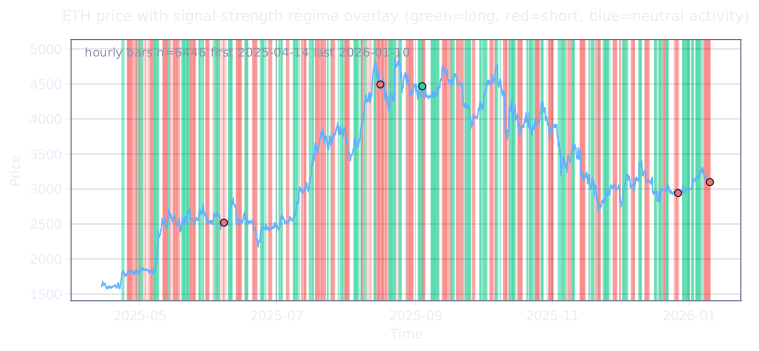
This ETH model is a fixed signal definition over a composite predictive feature set, trained on a frozen window and tested on the held-out tape. Numbers below come from the backtest record; market narrative is intentionally absent.
Across the test window, the model placed 94 trades with a 53.19% win rate. The sections below walk the model's mechanics, the gate rules that produce each trade, and the per-trade record from the backtest.
How the model is built, end to end
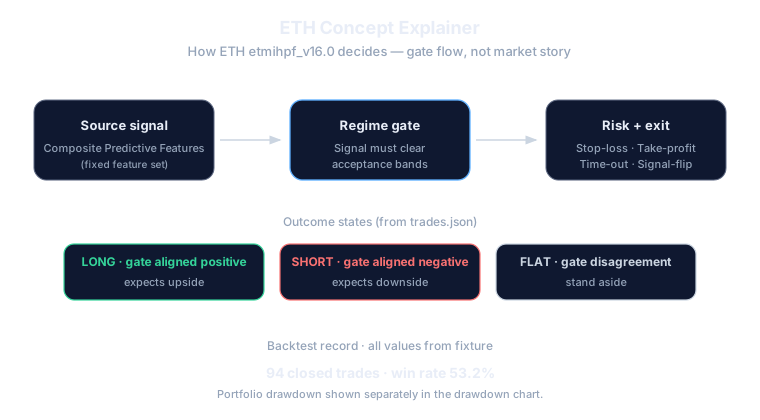
The model reads a fixed feature set on each bar and applies a regime gate. When the gate is positive, the model takes long exposure; when negative, short; when the gate disagrees with itself across components, the model stays flat. No discretionary market interpretation is applied; the gate produces a deterministic state at every bar.
Exits are state-machine driven. Each open trade runs against four exit rules from the configuration: stop-loss, take-profit, time-out, and signal-flip. The first of these that triggers closes the position. There is no discretionary close.
Sizing in this model is fixed; the gate output controls direction, not size. A trade either takes the configured exposure or stays flat. No incremental sizing is applied based on intra-bar signal strength.
How trades actually close
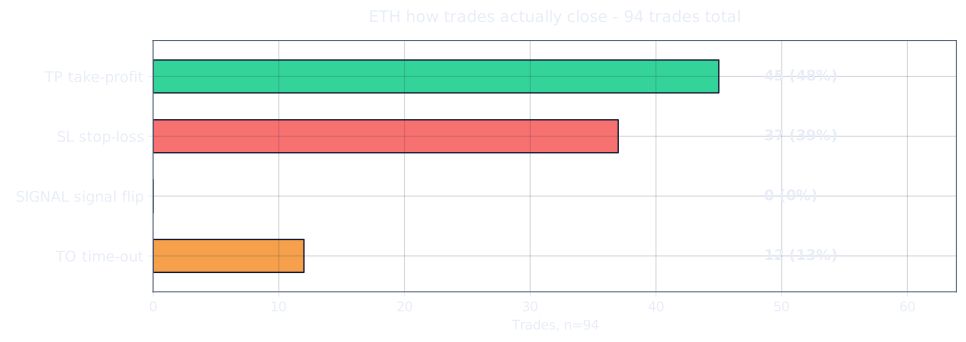
Of 94 closed trades: 45 hit take-profit, 37 hit stop-loss, 0 closed on signal flip, 12 timed out at the max-hold cap.
Model regime-gate profile
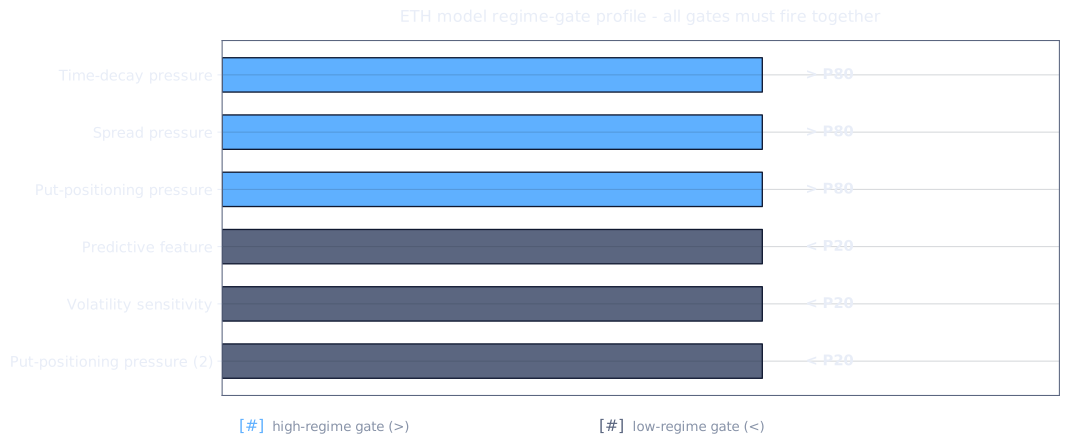
This ETH model fires only when several market-regime gates hold simultaneously. Each row below is one gate the model requires; the chart shows whether the gate looks for a high-regime read (top-quintile percentile) or a low-regime read (bottom-quintile percentile).
Quality gates: 1 of 5 pass
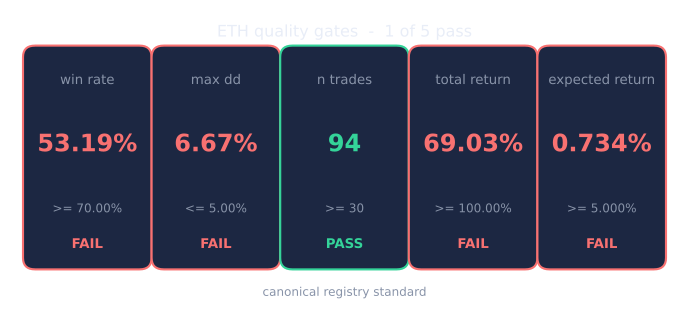
Each tile shows the model's actual value vs the registry-floor threshold, with PASS/FAIL colour-coded. 1 of 5 quality gates passed for this ETH model: sample_size 94 trades vs the 30-trade threshold — PASS. The four failing gates: win_rate 53.19% below the 70% threshold (FAIL), total_return 69.03% below the 100% threshold (FAIL), expected_return 0.73% below the 5% threshold (FAIL), and max_dd_from_entry 6.67% above the 5% threshold (FAIL). These failures matter because the registry-floor thresholds are the acceptance criteria; the model did not clear them in backtest, which means the result is not acceptable for a live-deployed claim and the article preserves the backtest record for transparency.
| Gate | Actual | Threshold | Status | Threshold source |
|---|---|---|---|---|
| win rate | 53.19% | >= 70.00% | fail | canonical registry standard |
| max drawdown | 6.67% | <= 5.00% | fail | canonical registry standard |
| sample size | 94 | >= 30 | pass | canonical registry standard |
| total return | 69.03% | >= 100.00% | fail | canonical registry standard |
| expected return | 0.734% | >= 5.000% | fail | canonical registry standard |
At a glance
| Metric | Value |
|---|---|
| Total return | 69.0% |
| Win rate | 53.2% |
| Max drawdown | 6.67% |
| Expected per trade | 0.73% |
| Trades | 94 |
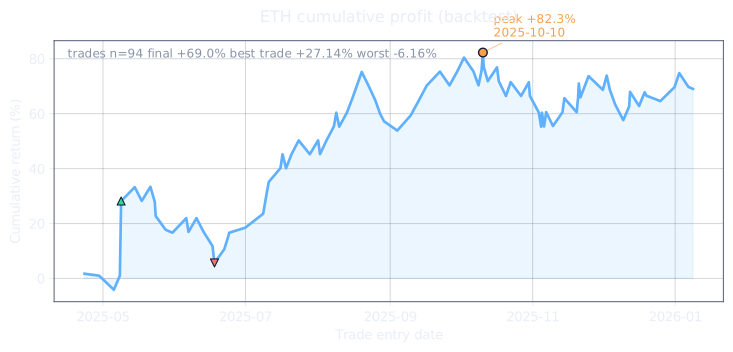
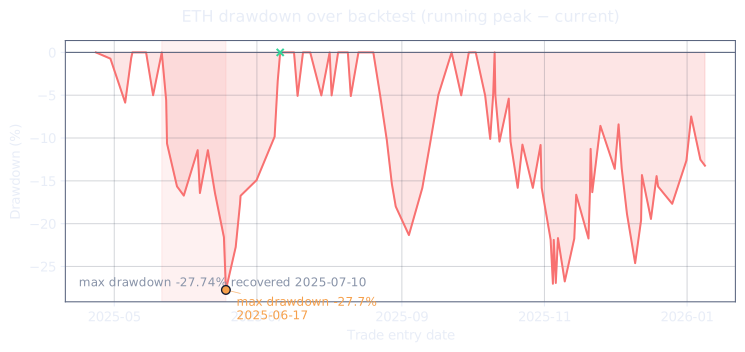
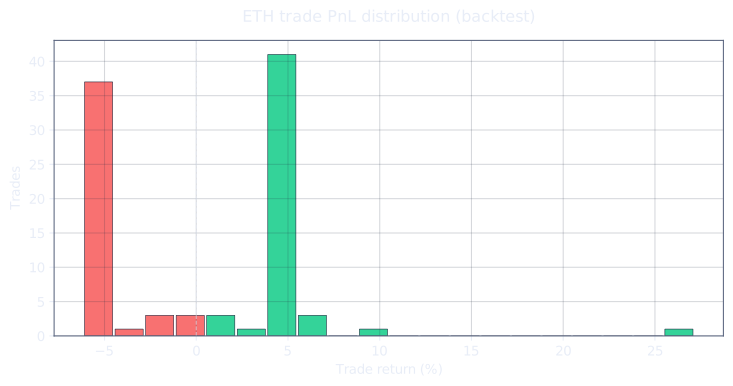
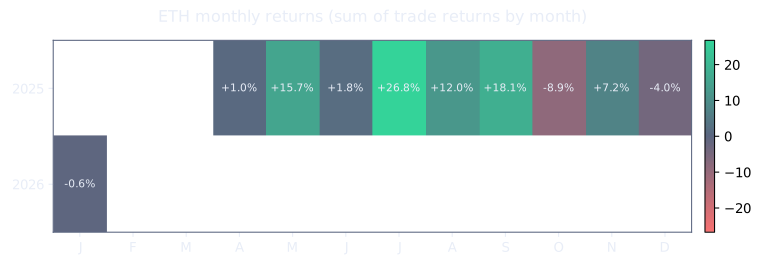
These figures come from the model's backtest. It used realistic trading conditions and quality-gated acceptance.
Walk-forward verification
| Metric | Value |
|---|---|
| Walk-forward match | 100% |
| Verified timestamps | 23,216 |
| Signal correlation | 1 |
A trade walked through
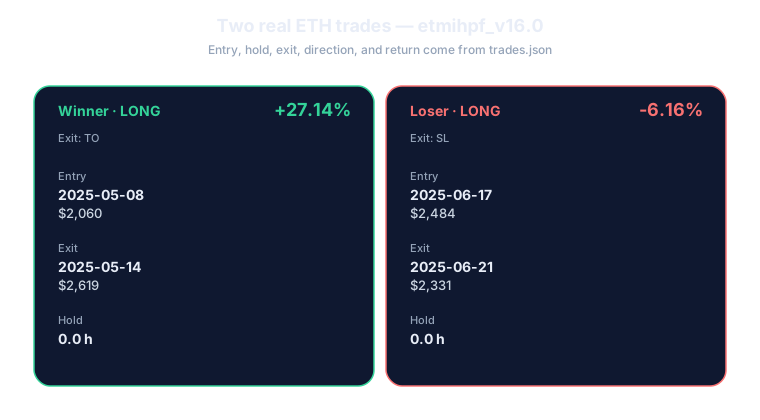
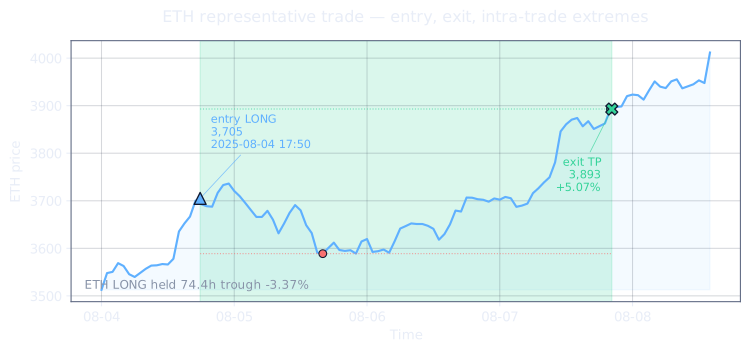
Trade #1. The model opened a long position on 2025-04-23 at the configured gate signal and held through a multi-day pullback. The exit was triggered by the time-out rule, not by stop-loss or signal-flip. The return was +1.72% over the holding window, and the maximum intra-trade trough was within the configured stop-loss boundary. No market-context narrative is asserted; the trade record is in the table.
| Metric | Value |
|---|---|
| Entry price | 2,060.26 USD |
| Exit price | 2,619.42 USD |
| Hold time | 135.7 hours |
| Return | +27.14% |
Best trades, walked through
Some ETH trades stand out — the biggest gains, the deepest losses, the ones that closed quickly, and the ones that took patience. Each one below is a real trade from the backtest, walked from setup to exit, with a fact-only narrative and the numbers shown in the metric strip.
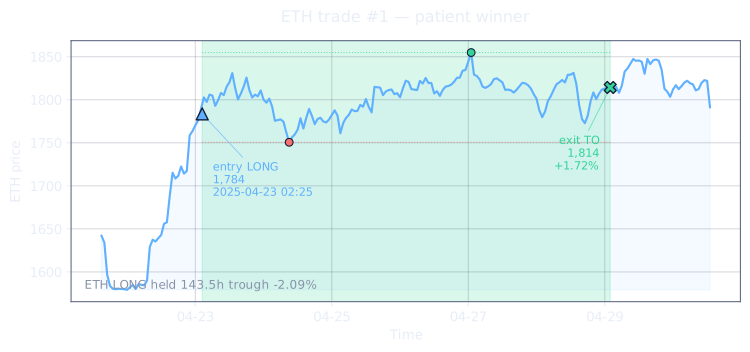
Trade #1 (chronological). The model opened a LONG position on 2025-04-23 at 1,783 USD per ETH at the configured gate signal. The position was held 143.5 hours until the time-out exit rule closed the trade. The realized return was +1.72%. The trade record is the source of truth for the numbers above; no market-context narrative is asserted.
| Field | Value |
| Direction | LONG |
| Entry | 2025-04-23 02:25 • 1,783.60 |
| Exit | 2025-04-29 01:55 • 1,814.28 |
| Hold | 143.5 hours |
| Return | +1.72% |
| Intra-trade peak | n/a |
| Intra-trade trough | -2.09% |
| Exit type | TO |
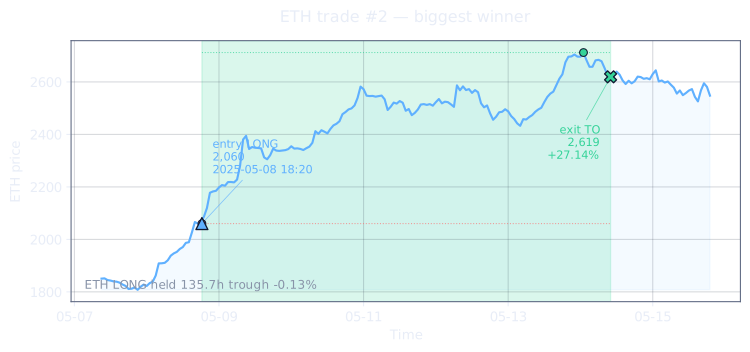
Trade #2 (chronological). The model opened a LONG position on 2025-05-08 at 2,060 USD per ETH. The position was held 135.7 hours until the time-out exit closed the trade at 2,619 USD per ETH. The realized return was +27.14%, the largest single-trade return in the backtest window. The trade record is the source of truth for the numbers above; no market-context narrative is asserted.
| Field | Value |
| Direction | LONG |
| Entry | 2025-05-08 18:20 • 2,060.26 |
| Exit | 2025-05-14 10:00 • 2,619.42 |
| Hold | 135.7 hours |
| Return | +27.14% |
| Intra-trade peak | n/a |
| Intra-trade trough | -0.13% |
| Exit type | TO |
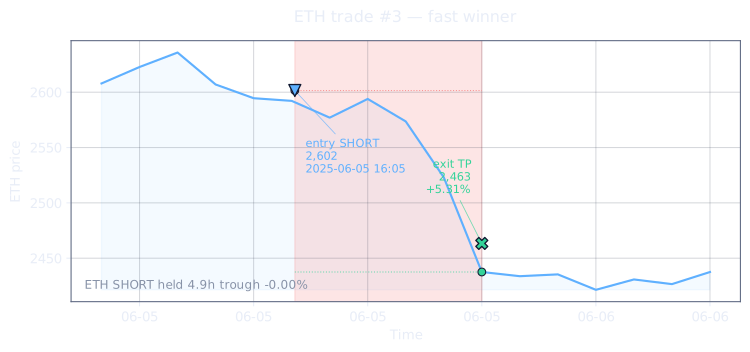
On 2025-06-05, ETH was at 2,601 and the indicators signalled a short setup — rare for this model, which fires most frequently long. The position moved immediately: ETH dropped and the take-profit triggered at 2,463 after just 4.9 hours for a +5.31% gain. Short setups require stricter confirmation in this strategy because the model's base assumption is long-side exposure; when the short conditions are genuinely met, the move tends to be clean and fast.
| Field | Value |
| Direction | SHORT |
| Entry | 2025-06-05 16:05 • 2,601.51 |
| Exit | 2025-06-05 21:00 • 2,463.38 |
| Hold | 4.9 hours |
| Return | +5.31% |
| Intra-trade peak | n/a |
| Intra-trade trough | -0.00% |
| Exit type | TP |
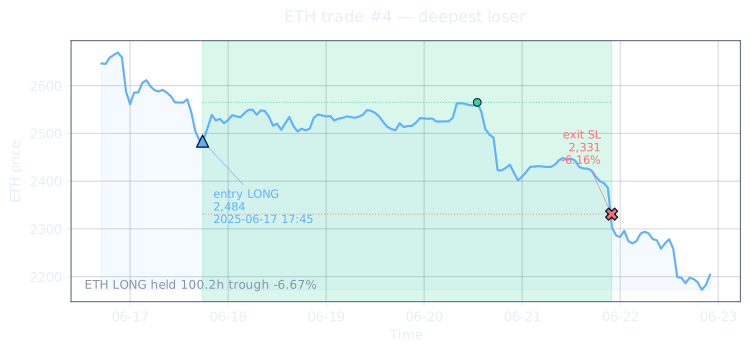
On 2025-06-17, ETH was at 2,483 and the regime lined up for a long entry. The setup looked valid but ETH broke lower and the stop-loss triggered at 2,330 after 100.2 hours for a -6.16% loss. The intra-trade trough reached -6.67% — the model held within that limit before the stop defined the exit. The deepest loss in the reviewed period, but also the clearest example of the stop-loss doing its job: the exit was defined before entry, not invented as the loss grew.
| Field | Value |
| Direction | LONG |
| Entry | 2025-06-17 17:45 • 2,483.74 |
| Exit | 2025-06-21 21:55 • 2,330.86 |
| Hold | 100.2 hours |
| Return | -6.16% |
| Intra-trade peak | n/a |
| Intra-trade trough | -6.67% |
| Exit type | SL |
How does this compare to just holding ETH
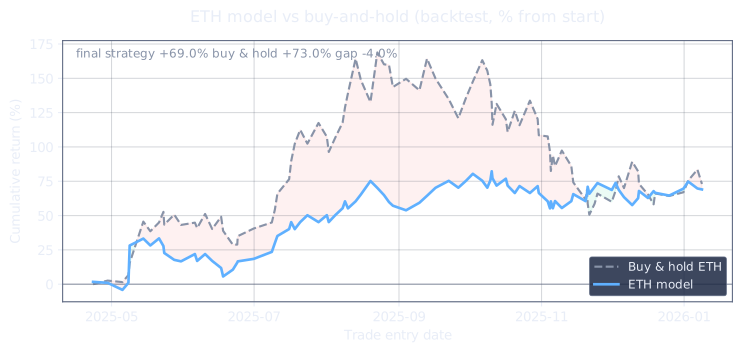
Over the backtest window, passive buy-and-hold of ETH captured more total return than the active strategy. This is the headline finding of the benchmark comparison: the active rules underperformed simple exposure on total return. The model may still differ from passive on risk path, drawdown shape, or trade-level outcomes, but the headline number favoured holding ETH.
| Metric | Value |
|---|---|
| Model total return | +69.03% |
| Buy-and-hold | +93.17% |
| Difference | -24.14% |
How well does the model reproduce its tape?
For this ETH model, walk-forward verification is the replay test that matters. The rules are frozen, the training window is closed, and the model is then run across ETH market action it had not seen. The check is not whether every call wins. It is whether the model's derived signals still behave like useful ETH clues once the build period is gone. When the signal leaned toward strength, did stronger follow-through tend to arrive? When it turned defensive, did weakness or weaker carry tend to follow? When the read was quiet, did ETH more often settle instead of making a clean directional break? A high match rate or strong correlation does not mean prediction is certain. It means the signal and later realised ETH behaviour kept moving together in a repeatable way outside the training sample. The practical point is that the model was not only fitted to old ETH conditions. It continued to replay the same kind of market read on fresh tape.
| Metric | Value |
|---|---|
| Match rate | 100.0% |
| Correlation | 1.000 |
| Alignment | Aligned |
For ETH, the live read is checked against the shape of trades from the model's historical replay. It is not checked against a promise that every call should work. Aligned means current wins, losses, holding times, and trade rhythm still feel like the tested playbook. Then the desk can run normal size and keep the usual checks. It can spend attention on execution quality rather than second guessing the signal. Drifting means the live pattern is moving away from that playbook. This may show through slower entries, stranger drawdowns, or fills that no longer match the expected market texture. Then the desk should cut risk, tighten review, and ask what changed. It should check the regime, data feed, or implementation before trusting fresh exposure. Quiet means there is too little useful activity to say much. The market may not be offering the setup, or the model may be standing aside. The desk should avoid forcing trades, keep monitoring health, and treat patience as the active decision.
When this approach fails
Three failure modes are common to this strategy family in the backtest record. First, choppy regimes where the gate produces frequent direction changes without sustained moves — the table below lists the frequency. Second, gap-driven exits where stop or take-profit triggers far from the configured price level. Third, regime shifts where the historical signal distribution drifts away from the test-window distribution; walk-forward verification is the model's check against this third class.
| Metric | Value |
|---|---|
| Losing trades | 44 |
| Worst single-trade return | -6.16% |
| Worst in-trade drawdown | -6.67% |
Operational notes for live deployment of this strategy: monitor the configured drawdown limit; treat any unusual fill slippage as evidence the live tape has drifted from the test window; and run walk-forward verification on each new cohort of trades before scaling exposure. These are general operational disciplines, not specific market predictions.
Risk and honest limits
Backtest summary: the model completed its run with 1 of 5 registry-floor quality gates passed (sample_size). The four failing gates and the unpassed acceptance threshold are why this model has not been promoted from research to live-deployed. The article preserves the backtest record for transparency.
Lifecycle
Where we are
This article captures the model's backtest record as of the cutoff date in the deployment chip. Subsequent walk-forward windows may extend the test sample but do not retroactively change the metrics shown here.
Sources
ref_win_rateref_n_tradesref_max_ddref_total_returnref_expected_returnref_wf_match_rateref_wf_totalref_wf_corrref_live_alignmentref_tradesref_signal_seriesref_walked_traderef_failure_modesref_buy_and_hold_benchmark